
Upskilling
5 min read
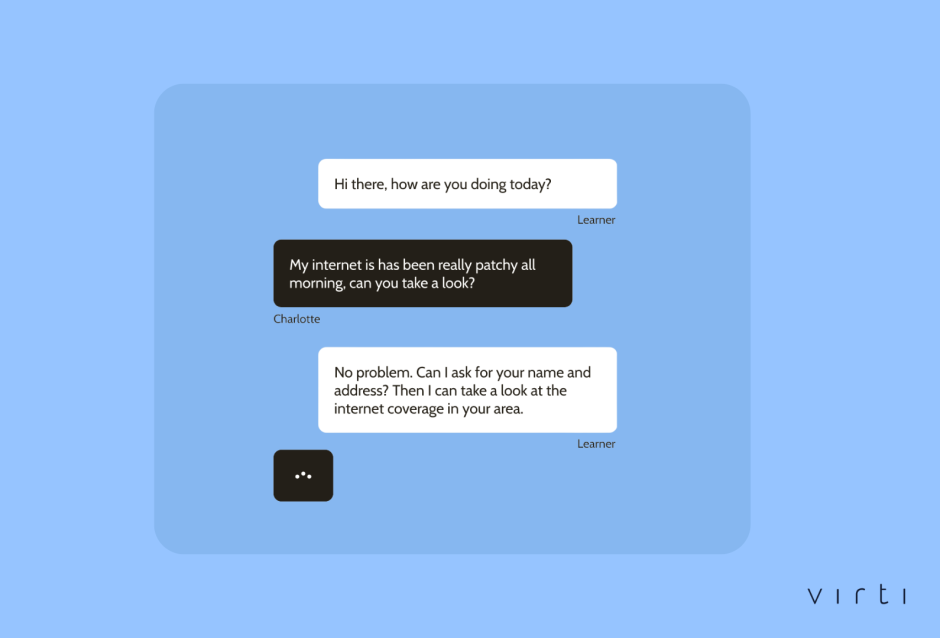
If you had to learn how to deal with a difficult customer, would you rather do a series of multiple-choice questions where you know what the obvious response is, or actually practice dealing with a difficult customer?
That’s essentially what scenario-based learning (SBL) is. It puts you right in the middle of realistic situations, helping you learn by doing instead of just reading or listening. This hands-on approach makes learning more realistic and keeps you engaged, while building important skills like problem-solving and critical thinking. Scenario-based learning fosters active learning where you get practical knowledge that you can actually use in real-world situations.
What is scenario-based learning?
At its core, scenario-based learning incorporates experiential learning, where learners actively engage with authentic situations to apply knowledge and develop skills. This method offers potential benefits over traditional approaches, such as increased engagement, immediate feedback, and improved skill retention.
Here are five compelling reasons to implement scenario based training, known for its numerous benefits of scenario learning, into your learning strategy:
1. Safe space for growth
Have you ever found yourself hesitating to take the leap at work, fearing the consequences of failure? With SBL, failure isn’t the end, it’s a stepping stone to success. By simulating real-life scenarios through simulated scenarios that provide a low risk environment and a safe environment for practice, learners can explore, experiment, and yes, even fail, without the fear of real-world repercussions. Whether it’s mastering medical procedures or navigating high-stakes negotiations, scenario based training provides a risk-free environment for learners to stretch their abilities and learn from their mistakes, experiencing both positive and negative consequences in a controlled setting. Scenario-based learning also enables observation and reflection on the learner’s response to different situations, further enhancing experiential learning.
2. Accelerated learning curve
When acquiring new skills, time is crucial. SBL not only teaches but also accelerates the learning process by having learners work through challenges in realistic, problem-solving scenarios. By immersing learners in realistic scenarios, scenario based learning helps them develop skills faster than traditional methods, as learners participate in interactive scenarios that mirror real-world tasks. Whether it’s dealing with difficult customers or facing complex challenges, scenario based experiences provide learners with the practical experience they need to succeed in any situation. Immediate feedback is provided during these scenarios, helping learners adjust and improve their performance in real time. Well-designed training content and clearly defined learning objectives are essential to maximize the effectiveness of scenario-based learning, ensuring that each scenario aligns with desired outcomes and enhances learner engagement.
3. Cultivating soft skills
Soft skills, such as critical thinking, problem-solving, communication skills, and critical thinking skills, are the true keys to success and revenue growth. Scenario based learning provides a platform for developing these essential skills by challenging learners to think quickly, engage in decision making, and enhance their problem solving skills in real time. By exposing learners to different perspectives and encouraging group discussion, scenario-based learning helps them develop critical thinking and adapt to diverse, real-world situations. Whether it’s analyzing environments for risks or resolving conflicts, scenario based learning sharpens the cognitive abilities that distinguish top performers from the rest.
4. Maximizing knowledge retention
The key to long-term skill retention is not repetition, but rather, simulation-based learning a powerful learning experience that keeps learners engaged. By engaging learners on a deep emotional level, scenario based training embeds knowledge within their consciousness, resulting in retention rates as high as 90%. Through emotional engagement and active participation, learners are not just passive observers, but have learned as leading figures in their own learning journey. From heart-pounding simulations to thought-provoking experiences, scenario based learning ensures that every lesson leaves a lasting impression. Branching scenarios are used to create dynamic and memorable learning experiences, allowing learners to explore real-world challenges and outcomes through interactive decision-making.
5. Driving cost efficiency
While the benefits of scenario based learning for learners are undeniable, its impact on businesses is equally profound. By transitioning to technology-enabled learning solutions like scenario based learning, companies can reduce training expenses by up to 70%. With no need for physical infrastructure or logistical overheads, scenario based training offers unparalleled flexibility and scalability. And with content that’s evergreen and reusable, the return on investment only continues to grow over time.
In a world where adaptability is crucial, SBL stands out as an innovative and promising opportunity. By using immersive scenarios, we can fully engage learners and organizations alike in experiencing the benefits of scenario learning. Why stick to the old ways when you can embrace the future of workplace learning today? With immersive scenario-based training, the possibilities are limitless—and the journey is just beginning.