
Upskilling
10 min read
Whether it’s handling a tough customer call, giving constructive feedback to a colleague, or motivating a team under pressure soft skills are what separate good employees from great ones.
But while demand for soft skills like communication, empathy, and leadership continues to grow, most training approaches haven’t kept up. Slide decks, generic e-learning modules, and awkward role-plays often fall flat when it comes to preparing people for high-stakes, human interactions.
That’s where immersive video training steps in.
Rather than talking about soft skills, immersive video lets people step inside real-world scenarios and practice responding just like they would on the job.
In this quick article, we’ll explore why immersive video is redefining the future of soft skills training and how organizations are using the Virti platform to help their people lead better, communicate more effectively, and respond with empathy in real time.
What’s not working ins soft skill training right now?
Soft skills are complex. They involve reading body language, managing emotions, choosing the right words, and responding to unpredictable situations all in real time. That’s a lot to ask from traditional training methods.
Yet many organizations still rely on outdated formats like:
- Slide decks and lectures that deliver theory but offer no practice.
- Static e-learning modules that are passive and easy to click through without genuine engagement.
- In-person role-plays that often feel forced, awkward, or inconsistent depending on the facilitator.
These approaches tend to miss the mark for one simple reason:
– You can’t learn how to handle real-world conversations by watching a video or reading about them. You need to experience them. –
Soft skills require situational awareness, emotional intelligence, and adaptive communication — none of which can be fully developed in artificial or overly controlled training environments.
And when employees aren’t confident in their soft skills, it shows.
Whether it’s a manager avoiding difficult feedback, a customer service rep escalating a call unnecessarily, or a team lead struggling to motivate — the ripple effects can impact performance, morale, and even customer satisfaction.
That’s why modern teams need something.
What is immersive video training?
In a training context, immersive video places employees into realistic, high-pressure situations where they can observe, react, and make decisions as if they were actually there. Unlike traditional videos or static e-learning, these experiences are designed to feel real, engaging both the brain and the emotions.
Key features of immersive video training include:
- 360° or first-person perspective video that simulates real environments and viewpoints
- Interactive decision points where learners choose how to respond and see the consequences
- Scenario branching, where each choice shapes how the situation unfolds
- Performance analytics, helping learners and leaders track progress and improvement
But why does it work so well for soft skills?
Because soft skills are contextual and emotional. They’re not about memorizing the right phrase they’re about knowing how to respond when someone’s frustrated, nervous, or disengaged. Immersive video provides the psychological safety to make mistakes, try again, and learn through experience just like in the real world, but without the real-world consequences.
And it’s backed by research: Studies show that immersive, experiential learning can improve knowledge retention by up to 75%, while boosting learner confidence, engagement, and performance across the board.
For soft skills in particular where nuance, body language, and emotional cues are everything this type of training isn’t just nice to have. It’s essential.
Practicing the Soft Skills with Immersive video training
Immersive video lets managers and team members practice delivering tough feedback in realistic scenarios, for example:
1. Giving and Receiving Feedback
Whether it’s a peer review or a one-on-one with a direct report, giving constructive feedback is a skill that requires tact, timing, and emotional sensitivity. Immersive video lets managers and team members practice delivering tough feedback in realistic scenarios and experience how different delivery styles land.
2. Navigating Difficult Conversations
From conflict resolution to underperformance discussions, tough conversations are where soft skills are tested the most. Immersive scenarios simulate the tension and emotion of these moments, helping learners practice staying calm, engaging in active listening, and responding with empathy before it happens for real.
3. Leadership and Coaching Conversations
Being a good leader isn’t just about setting direction it’s about having meaningful conversations that motivate, align, and empower. A positive attitude is crucial in leadership as it fosters a supportive and motivating environment. Immersive scenarios let aspiring and current leaders practice coaching team members, leading performance reviews, or inspiring action through storytelling, empathy, and effective goal setting.
4. Customer Service Interactions
Frontline teams deal with a wide range of emotions from frustrated customers to high-stress requests. Immersive video can replicate these scenarios so reps can practice de-escalation techniques, tone control, and service recovery strategies that build trust and loyalty, ultimately enhancing business outcomes.
At Virti, we know that the best way to build soft skills is to create realistic, repeatable experiences where people can actually practice, not just consume information. That’s exactly what our immersive video tools are designed to do. Effective customer service also relies heavily on collaboration, ensuring that team members work together seamlessly to resolve issues and improve customer satisfaction.
What is Soft Skills Training?
Soft skills training focuses on developing non-technical abilities that are crucial for success in the workplace. Unlike hard skills, which are specific to a particular job or industry, soft skills are transferable and can be applied across various roles and sectors. These skills include effective communication, teamwork, and problem-solving, all of which are essential for managing tasks and interacting with others in a professional environment. Soft skills training aims to help individuals develop the capabilities they need to adapt to changing situations, manage their time efficiently, and collaborate effectively with colleagues.
Benefits of Soft Skills Training
Soft skills training offer numerous benefits for both individuals and organizations. Some of the key advantages include:
- Improved Communication: Enhances the ability to communicate effectively and work collaboratively with others.
- Enhanced Problem-Solving: Develops the capacity to analyze issues and devise effective solutions.
- Increased Confidence: Boosts self-assurance and helps individuals understand their strengths and areas for improvement.
- Better Time Management: Teaches strategies for prioritizing tasks and managing time efficiently.
- Improved Leadership and Management Skills: Equips individuals with the skills needed to lead and manage teams effectively.
Soft skills and Immersive video
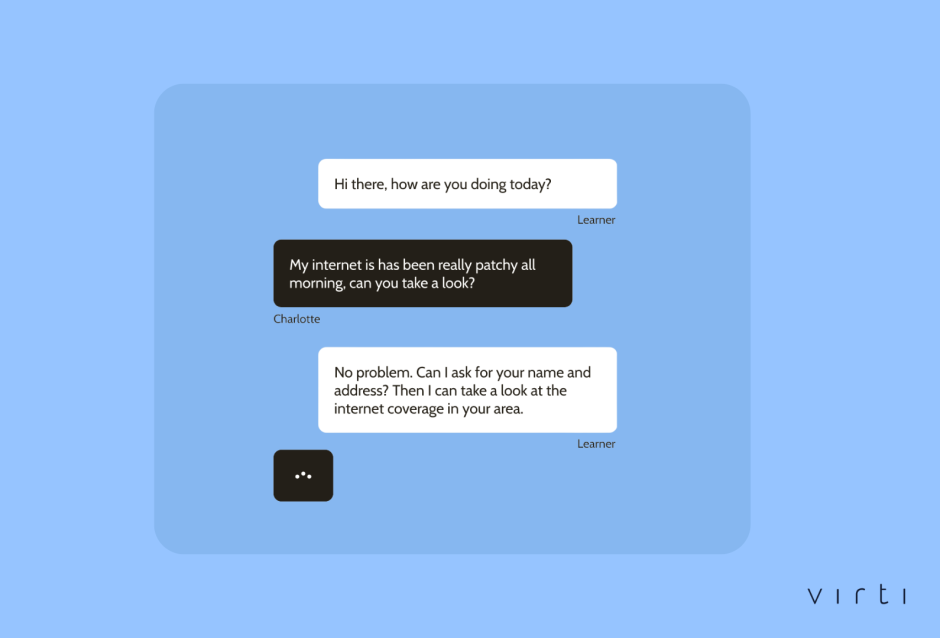
With Virti, you can create custom video-based simulations that mirror the conversations your team faces every day from customer complaints to leadership challenges. Learners are placed in dynamic environments where their choices shape how the scenario unfolds, helping them test strategies and build confidence in a safe space.
Engaging subject matter experts from L&D and HR teams ensures that the training material is relevant and effective, making the scenarios more realistic and impactful.
Here’s how Virti helps organizations bring soft skills training to life with immersive video:
Feedback and analytics that drive growth
Every interaction is tracked to measure the effectiveness of training. Virti captures how learners respond, which decisions they make, and how their choices impact the outcome. Instant feedback is crucial in this process, as it allows learners to quickly identify areas for improvement and enhance their performance. This data can be used to give personalized feedback, track progress over time, and pinpoint coaching opportunities for managers and L&D teams.
Accessible anywhere, anytime
Whether your team is in the office, hybrid, or remote, Virti’s immersive training is fully accessible via online platforms on desktop or mobile. That means consistent, high-quality training no matter where your people are or when they need it.
Scalable for teams of all sizes
From fast-growing startups to global enterprises, Virti enables businesses to deliver soft skills training at scale. You can standardize key scenarios, ensure consistent messaging, and roll out updates instantly all while keeping the experience deeply human and personal.
Whether you’re training new managers, upskilling frontline teams, or creating a culture of empathy and emotional intelligence,
Ready to move beyond slide decks and awkward role-plays? Immersive video might sound high-tech, but getting started is easier than you think especially with platforms like Virti that streamline content creation, delivery, and tracking.

Getting started with Immersive Video Training
Here’s how to kick off your immersive soft skills training journey:
1. Identify Your Priority Skill Gaps
Start by talking to managers, HR, or team leads. Where do your people struggle most? Feedback conversations? Handling complaints? Motivating remote teams? Pinpointing high-impact skill gaps helps focus your content on the scenarios that matter most.
2. Choose High-Stakes, Real-World Scenarios
The best immersive training replicates real challenges your employees actually face. Select a few common yet high-pressure situations like dealing with a difficult customer or navigating a team conflict to build your first scenarios around.
Incorporating projects into your training can provide practical learning experiences, allowing learners to engage in hands-on activities that build job-relevant skills quickly.
3. Keep It Real and Relatable
Use realistic characters, natural dialogue, and authentic settings. Learners should see themselves in the experience. The more relatable the scenario, the more likely the learning will stick.
4. Build Feedback Loops
Don’t stop at the scenario. Use built-in analytics and feedback tools (like those in Virti) to show learners where they did well and what they could improve. This turns training into a growth journey not a one-off event.
Incorporating structured learning paths can further enhance professional development by guiding individuals through specific areas such as time management, interpersonal skills, and public speaking, allowing them to efficiently progress at their own pace while obtaining relevant skills and certifications.
5. Roll It Out, Then Scale It Up
Start with one team or department and gather feedback. Once you’ve proven the value, expand to other groups, adapt content to different roles, and build a library of immersive scenarios tailored to your organization’s needs.

Wrapping it up
With the right approach, immersive video doesn’t just supplement your training, it transforms it. And platforms like Virti make it easy to start strong and scale fast.
That’s why immersive video is such a game-changer. It brings learning to life by letting people experience and practice critical interactions not just read or hear about them. From handling difficult conversations to giving effective feedback, immersive video enables teams to build confidence, emotional intelligence, and real-world readiness.