A Practical Strategy for Scalable, Human-Centered Simulation
For years, artificial intelligence in learning and development (L&D) was discussed in terms of potential. Now, it’s being implemented. And in too many organizations, it’s being implemented badly. In fact, more than two thirds of organizations are already benefiting from AI-driven personalized learning solutions. Highlighting the widespread adoption and effectiveness of these technologies.
The problem isn’t the technology. It’s the way it’s being used: as a silver bullet, not a system. That distinction is critical.
As outlined in Training Magazine’s March 2025 report, “Navigating the Realities of AI in Learning and Talent Development,” AI works when it’s applied to real-world problems. Using methods that prioritize structure, measurement, and human oversight. Not when it’s dropped on top of a broken process and expected to fix everything. Current industry trends further demonstrate how organizations are leveraging AI to stay ahead in learning and development.
At Virti, we’ve followed this method since day one. Looking to the future, AI will continue to shape the landscape of learning and development, enabling organizations to thrive in a fast changing world.
1. AI Role-Play, Grounded in Reality
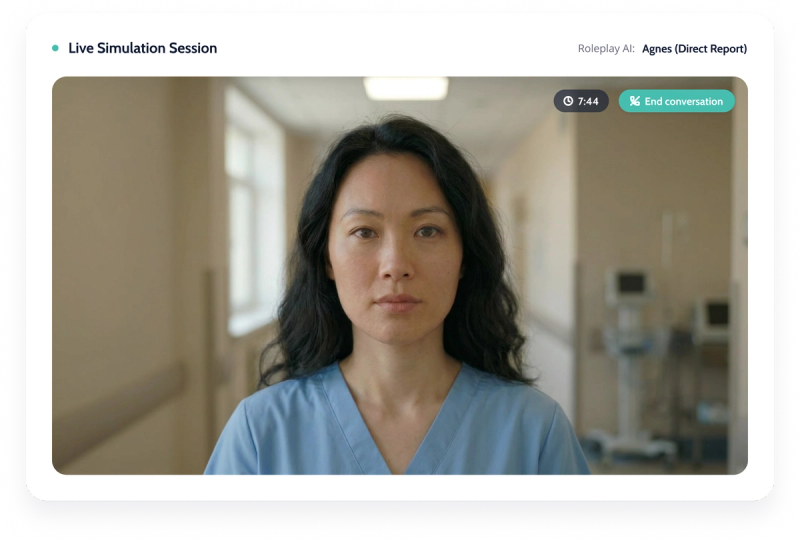
Virti’s AI avatars aren’t novelty interfaces, they’re training instruments. Built to simulate real conversations in real workplace settings, they enable AI-driven workplace learning through realistic scenarios and immersive simulations. Whether it’s a physician delivering bad news or a salesperson overcoming objections, these simulations are designed to model what employees will face on the job.
Unlike traditional video-based modules or passive e-learning, our platform is built for active participation. Learners make decisions. They respond in real time. They learn by doing, with virtual reality as a component for creating engaging and effective learning experiences.

2. Curriculum-First, Not Tech-First
Virti modules are mapped directly to each client’s training curriculum. We integrate objectives, scenarios, assessment criteria, and performance benchmarks. Adaptive learning technologies enable the platform to address individual needs and learning preferences, ensuring that each learner receives content tailored to their unique requirements. Then we overlay adaptive logic—AI that adjusts based on user inputs. Learners are challenged, but not overwhelmed. Trainers can track progress with precision.
With AI-driven adaptive learning, traditional learning programs can be transformed into hyper personalized learning experiences. These experiences deliver highly tailored, real-time, and adaptive content that evolves with each learner, maximizing engagement and supporting organizational goals.
3. The Human Factor Isn’t Optional
AI doesn’t replace coaches or educators. It supports them. L&D professionals and development professionals can shift their focus from routine content creation and support tasks to more strategic activities such as curriculum design, governance, and program optimization with the support of AI. Facilitation, emotional insight, and ethical judgment remain human responsibilities.
AI delivers consistent feedback, objective scoring, and usage analytics—freeing up trainers to do what only they can do.
4. Measured Pilots, Not Theoretical Rollouts
Every Virti deployment begins with a targeted pilot. For example, in Taiwan, a group of hospitals tested empathy training using simulated patient conversations. Once performance data came in, the program was scaled across departments. Standardization and measurable improvement followed.
Similarly, in the UK, a retailer launched AI sales simulations with its showroom teams. The results were clear: a 40% increase in conversion. Not projection. Performance.
This is how you scale: you test, you prove, then you expand.
5. Numbers That Matter
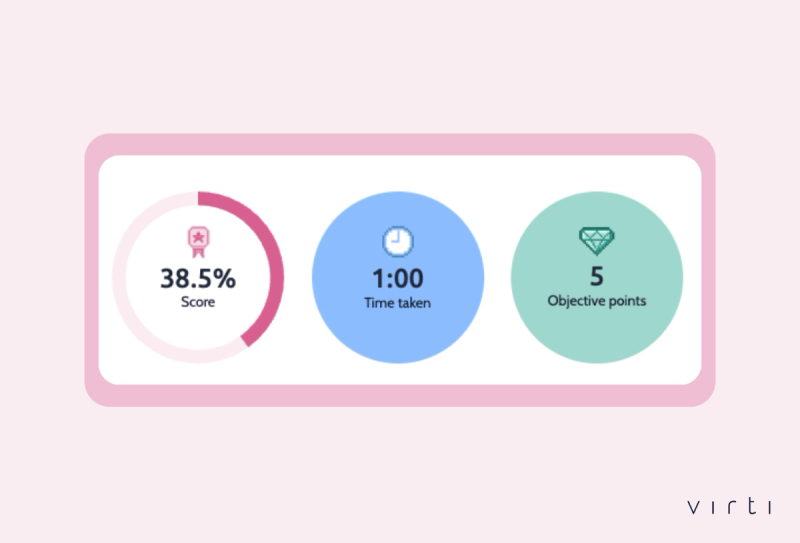
Every session on the Virti platform is tracked. Completion rates, scoring trends, learner behavior patterns, time spent per module—everything is measurable. Our dashboards turn these data points into actionable insights, enabling L&D leaders to adjust content, validate ROI, and drive business results.
With AI-driven analytics and predictive analytics, organizations can identify trends in learner data, proactively address skill gaps, and enhance learning outcomes by personalizing and optimizing training programs.
What This Means for Healthcare
Empathy and communication aren’t soft skills—they’re mission-critical in medicine. But until now, they’ve been difficult to train at scale. With Virti’s AI-powered patient simulations, Taiwan’s hospitals have been able to deliver—and assess—consistent, high-quality communication across frontline staff. These AI-powered simulations support employee development by helping staff develop new skills and improve communication, ensuring the workforce is ready to meet evolving healthcare challenges.
That’s not a theory. It’s happening now.

What This Means for Sales
Sales training often depends on sporadic role-plays and gut-feel coaching. It’s inconsistent, hard to measure, and nearly impossible to scale. AI-driven corporate training is revolutionizing workplace learning by personalizing development and preparing sales teams to thrive in competitive environments. Virti takes this a step further by simulating real client conversations using AI, allowing reps to practice and refine their skills in a risk-free setting before ever making a call. The result is faster onboarding, stronger performance, and measurable gains across the team.
The Virti Framework
The systems that work share four characteristics:
- Curriculum-first design. Not software-first.
- Targeted pilots. Not blanket deployments.
- Human + AI collaboration. Not human replacement.
- Real-time data. Not anecdotal feedback.
This is the structure Training Magazine outlines. It’s also the structure Virti uses to deliver results.
These are the key ways the Virti leverages advanced technologies, including AI tools, generative AI, and machine learning, to transform the learning process. By integrating content curation, content creation, and AI-powered tools and platforms, Virti streamlines the development of learning content and training materials, making the process less time-consuming and more efficient. Real-time feedback and analytics help identify trends, predict future learning needs, and ensure that training content remains aligned with organizational goals in a rapidly changing environment. The profound impact of AI technologies like Virti is evident in how they change corporate learning, training content, and the entire learning process, driving better outcomes for both organizations and learners.
Final Word
AI will not eliminate trainers. It will eliminate bad training.
The organizations that succeed won’t be the ones that adopt the newest tools, they’ll be the ones that deploy those tools within frameworks built on rigor, insight, and data.
At Virti, we don’t promise magic. We deliver systems that work.
For leaders evaluating AI in L&D: Start small. Think in systems. Trust the numbers. And never remove the human from the loop.