
News
9 min read
Most new starters decide how they feel about a job long before their first month is out. And too often, that early impression is shaped by being left to sink or swim: a login, a handbook, a quick tour of the tools, and then straight into the deep end. It is no surprise that ramp is slow, confidence is shaky, and some of your best hires quietly start looking elsewhere.
Onboarding training is how you change that. Done well, it turns those uncertain first weeks into a structured path that builds real capability, not just a folder of policies to skim. This guide walks through what onboarding training actually is, why it works when it is built on practice, and how to know it is paying off.
Your Learning Path
- What onboarding training actually is, in plain terms
- Why it works when it puts people into practice, not just presentations
- The benefits you can expect across the first weeks
- What good onboarding training looks like in the real world
- How to measure whether it is working
What Is Onboarding Training?
Onboarding training is the structured learning that helps a new starter become genuinely capable in their role. It goes well beyond a single induction day. Where an induction hands over the essentials and welcomes someone in, onboarding training is the ongoing process that builds the skills, confidence, and context they need to do the job well.
In practice, that means covering three things. The role itself, so people can carry out the core tasks expected of them. The tools and systems they will rely on day to day. And the culture, so they understand how your organisation works, who to turn to, and what good looks like here.
The difference matters. An induction tells someone where the fire exits are. Onboarding training makes sure that, weeks in, they can actually do their job with confidence rather than quietly guessing their way through it.
Why Onboarding Training Works
The reason strong onboarding training works comes down to one idea: people learn by doing, not by watching.
A slide deck can explain a sales conversation, a difficult customer, or a first team meeting. It cannot prepare someone to handle one. Onboarding training works because it lets new starters practise the real situations they will face, in a safe space, before those moments count for real. They can try, get it wrong, try again, and build the muscle memory that turns knowledge into confident action.
It also brings consistency. When onboarding relies on whoever happens to be free to show a new joiner the ropes, every starter gets a different experience. Structured onboarding training gives everyone the same strong start, whatever their team, manager, or location.
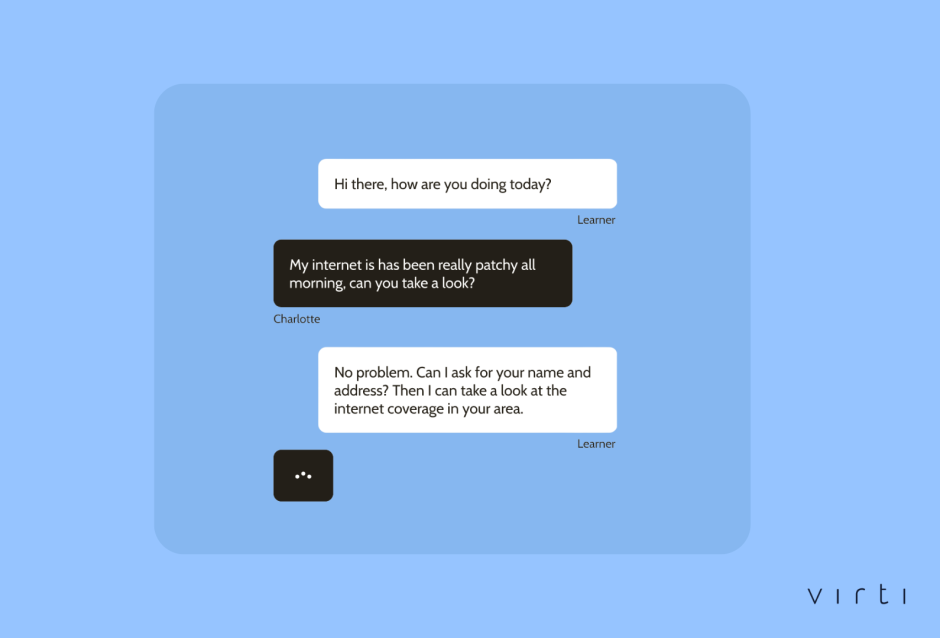
This is where immersive practice comes into its own. With Virti, new starters can rehearse real conversations with Virtual Humans, work through AI roleplay scenarios tailored to their role, and get instant coaching on how they did. They arrive at the real thing having already done it, more than once.

The Benefits of Onboarding Training for Employee Engagement
When onboarding training is built on practice rather than passive reading, the payoffs show up quickly:
- Faster time to productivity. People reach the point of contributing sooner, because they have already rehearsed the work rather than meeting it cold.
- Stronger confidence from day one. Having practised the tricky moments, new starters step into them steadily instead of anxiously.
- A consistent experience for everyone. Every starter gets the same quality of start, regardless of who is around to help.
- Better early retention. People who feel capable and supported early are far more likely to stay.
- Less drain on your senior team. When practice happens in the platform, experienced staff spend less time shadowing and repeating themselves, and more time on their own work.
What Good Onboarding Training for New Hires Looks Like
Good onboarding training is structured, not ad hoc. It follows a clear path, so nobody is left wondering what they should be learning or when.
It is also spread across weeks, not crammed into a single overwhelming first day. Capability builds in layers, and people need room to absorb, practise, and apply. The strongest programmes stage learning so each week builds on the last, moving from the basics towards the more demanding parts of the role as confidence grows.
And it is grounded in practice. The moments that decide whether someone thrives are rarely the ones you can teach from a document: the first client call, the awkward question, the high pressure handover. Good onboarding training gives people the chance to rehearse those moments before they meet them for real.
Good onboarding training also surrounds people with support rather than leaving them to work it out alone. A mentorship programme or buddy system gives every new starter a familiar face to turn to, helping them connect with key team members and building the cross functional relationships that make someone feel part of the organisation, not just employed by it. That human support is what turns a structured programme into one people actually enjoy moving through.
The best programmes back that up with the right tools. Learning management systems and digital platforms keep the quality consistent and the experience personal, whether someone is in the office or onboarding remotely, and a little gamification goes a long way in keeping people engaged as they progress. Together, mentorship and the right technology mean no new starter has to learn in isolation.
Measuring Onboarding Effectiveness: Training That Works
If onboarding training is worth investing in, it is worth measuring. A strong onboarding training programme is built on clear onboarding and training materials, an employee handbook, and the right compliance training, all shaped with input from key stakeholders and your HR teams. Get that foundation right and a few signals will tell you whether it is doing its job and reinforcing your organisation’s culture.
Time to productivity is the clearest. How long does it take a new starter to reach the point where they are contributing at the level you hired them for? Strong onboarding training brings that number down. In practice, onboarding often runs from one to six months, so new hires can absorb it in stages rather than feel overwhelmed. Regular check ins along the way spot gaps early, and combining several learning methods, including interactive training sessions, makes the whole programme more effective.
Confidence is the next signal. Simple check ins, or the coaching data from practice sessions, show you whether people feel ready or are still hesitating. Gathering feedback in those moments helps you understand the learning curve and adjust support before small issues slow someone down.
And early retention tells the longer story. The starters who feel capable and supported in their first weeks are the ones who stay, grow, and go on to do their best work with you. To see that clearly, track your key metrics, time to productivity, confidence, and retention, alongside performance data and feedback from new hires. It is a fuller picture still when role specific training and training modules are tailored to the job, like giving a software developer targeted practice before they ship production code.
How to Get Started with Virti
Virti makes practice based onboarding training simple to deliver at scale. Instead of relying on documents and the goodwill of busy colleagues, you can build a structured path where every new starter rehearses the real conversations and decisions their role demands.
New joiners practise with Virtual Humans that respond like real people, work through AI roleplay scenarios shaped around your roles, and receive instant AI coaching on how they performed. You get a consistent, measurable programme that gives everyone a strong start, and gives you a clear view of how ready your people really are.
Before You Go
A few things to take with you:
- Onboarding training is not an induction day. It is the structured process within an onboarding training program, using digital tools to create a consistent process at scale and build real capability across a new starter’s first weeks.
- It works because people learn by doing. Structured training modules and onboarding materials improve the employee onboarding experience because practice, not passive reading, is what turns knowledge into confident action.
- The key benefits are tangible: faster ramp, stronger confidence, a consistent experience, better retention, and more time back for your senior team.
- If it matters, measure it. Learning management systems help teams deliver and track training consistently, and 36% of remote workers report a confusing onboarding process. Time to productivity, confidence, and early retention will tell you whether it is working for long-term success.
FAQ
What is onboarding training? Onboarding training is the structured learning within employee onboarding that helps a new starter become genuinely capable in their role. As part of the wider onboarding process, it covers the skills, tools, and culture they need, and it runs across their first weeks rather than being squeezed into a single induction day.
How long should onboarding training last? There is no single right answer, but the strongest onboarding programs spread onboarding training across several weeks rather than front loading it into day one. This gives people time to absorb, practise, and apply what they are learning, supporting an effective onboarding process instead of forcing everything at once.
How is onboarding training different from general training? Onboarding training is focused specifically on helping new starters get up to speed and confident in a new role, whereas general training supports the ongoing development of people already established in their jobs. The two work best together, but effective onboarding programs also improve the employee onboarding experience and support long term success at work.