Giving feedback is one of the most important and most difficult workplace skills to master. Whether you're coaching a team member, sharing input with a peer, or figuring out how to provide negative feedback to your boss, these conversations can feel uncomfortable. Many people avoid them altogether, but avoiding feedback means missed opportunities for growth, stronger relationships, and better performance.
So, how do you build confidence in giving feedback? Typically people try workshops or in person role plays, but they often fall short of preparing you for the variety of real life scenarios you'll encounter. That's where AI role play comes in. By practising feedback role play scenarios with realistic, on demand Virtual Humans, you can sharpen your communication skills, build empathy, and get immediate coaching that makes your feedback clearer and more constructive.
Why Feedback Skills Matter
Strong feedback skills are at the core of effective leadership, teamwork, and personal growth. When done well, feedback strengthens trust, improves performance, and creates a culture where people feel supported rather than judged.
- For leaders: As the usual feedback giver, knowing how to give constructive feedback to direct reports helps align teams, motivate individuals, and address issues like missed deadlines before they grow.
- For peers: Providing constructive feedback promotes collaboration and prevents small frustrations from becoming conflicts.
- For employees: Learning how to provide feedback, especially to your boss or peers, builds confidence, encourages open communication, and shows initiative.
Without strong feedback skills, organisations risk miscommunication, disengagement, and weaker team performance. With them, teams become more adaptable, resilient, and focused on continuous improvement.
5 challenges in giving feedback
Even with the best intentions, providing feedback can be uncomfortable, especially when delivering negative feedback. Many people either avoid it altogether or deliver it in a way that misses the mark. Some common challenges include:
- Fear of conflict: Worrying that negative feedback will be taken personally or damage relationships.
- Lack of clarity: Giving vague or overly general positive feedback instead of actionable feedback, leaving the other person unsure of what to change.
- Emotional delivery: Letting frustration or stress slip into the conversation, which can make the message feel like criticism rather than a productive conversation, and trigger emotional reactions in the feedback receiver.
- Power dynamics: Struggling with how to provide feedback to your boss or a more senior colleague without overstepping.
- Delayed feedback: Waiting too long to address an issue, or delivering feedback in the wrong setting.
By understanding these hurdles, individuals and teams can prepare strategies to overcome them and start offering constructive feedback that leads to organisational growth rather than tension.
How we typically train giving feedback
Before AI role play, which we'll get to soon, most people learned how to give feedback through more traditional approaches. While these approaches have helped plenty of managers deliver effective feedback, they often come with limits on scalability and realism. Key methods include:
- Workshops and seminars: Trainers walk teams through structured frameworks like SBI (Situation, Behaviour, Impact) or “Sandwich” models, helping participants learn the mechanics of constructive feedback.
- Role playing with peers: Colleagues practise giving and receiving feedback in mock scenarios, with one person playing the feedback giver and another the feedback receiver, often guided by a manager or trainer. This builds confidence but can feel staged.
- Shadowing and observation: New managers or employees watch how experienced leaders give and receive feedback in a real feedback session, then model those techniques in their own conversations.
- Recorded sessions: Reviewing call recordings, meeting transcripts, or coaching sessions helps learners reflect on how to share specific feedback using the right tone, word choice, and delivery style.
- One to one coaching: Personalised coaching allows for tailored advice and practice, helping individuals receive more feedback, but it's resource intensive and not always available at scale.
These methods have laid the foundation for feedback training, but they struggle to replicate the real life situations and emotional responses that come up in work relationships.
How an AI Role Play Tool Helps with Feedback Training
AI role play tools like Virti upgrade feedback training with AI powered role play scenarios. They offer a safe space, available on demand, where employees can practise giving useful feedback without real world consequences. Unlike peer role play, AI scenarios don't feel rehearsed or judged, and they adapt dynamically to each user's responses, tone, and phrasing.
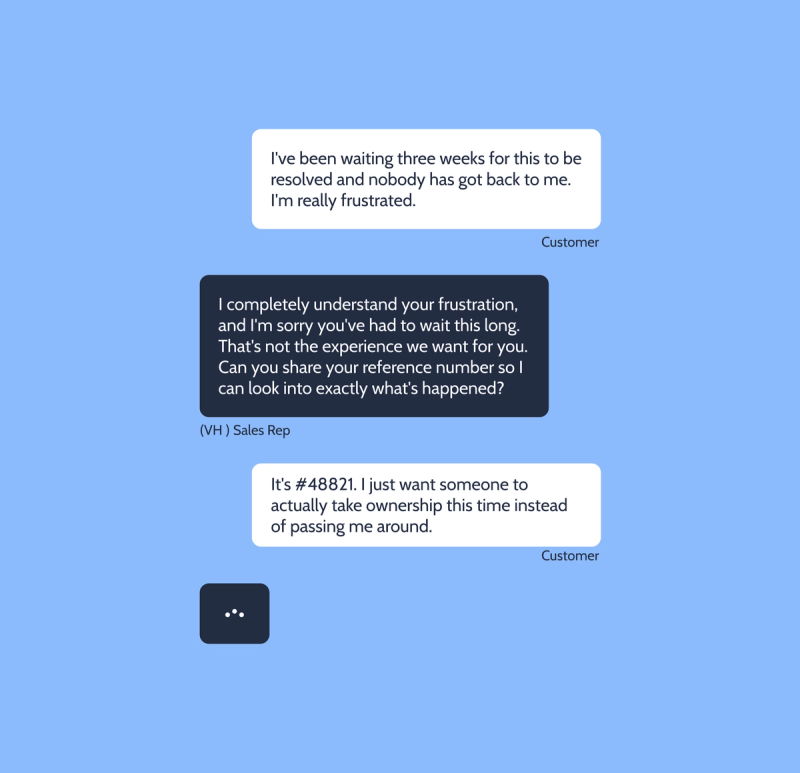
Learners can try scenarios like giving feedback to a peer or providing feedback to a boss. Virtual Humans can be designed to know what good feedback looks like and respond with openness, resistance, or defensiveness, adapting in real time to tone and phrasing. You can even set the Virtual Human to have very high expectations, just as people would in your organisation.
Why feedback training works with AI Role Play:
- Safe, focused practice in a supportive environment, without consequences
- Wide range of realistic scenarios to practise giving feedback effectively
- Scalable coaching anytime, anywhere with clear practical examples
- Progress tracking for measurable growth
With Virti, feedback training moves from theory to practice, helping employees deliver feedback that's clear, confident, and impactful to organisational performance.
Example to try: imagine a manager needing to address an employee whose performance has dipped because of personal challenges. In an AI role play, they can practise how to raise the issue in a supportive yet clear way. One attempt might come across as too harsh, another too lenient; with repeated practice, they can find the right balance of empathy and accountability. The AI coach provides feedback on tone, phrasing, and impact, helping the manager feel prepared to have a constructive real world conversation.

5 Feedback Role Play Scenarios to Practise
The best feedback role play scenarios mirror the conversations your people actually find hard. Here are five to start with, each one ready to build in Virti and run as often as your team needs.
- Missed deadlines: A team member has missed deadlines on a key project twice this month. Practise naming a specific example, explaining the impact on team performance, and agreeing an improvement plan without the conversation turning into blame.
- Peer to peer feedback: A colleague keeps talking over others in team meetings. Practise raising it as a peer, using “I” statements and finding common ground so the feedback feels collaborative rather than critical.
- Feedback to your boss: Your manager's last minute changes are putting pressure on tight deadlines. Practise providing constructive feedback upward, framed around business impact rather than personal frustration.
- Receiving constructive feedback: Swap roles so the Virtual Human becomes the feedback giver. Practise active listening, asking clarifying questions, and managing your own emotional responses when the feedback is hard to hear.
- Handling defensiveness: The feedback receiver pushes back or gets upset. Practise staying calm, separating the person from the behaviour, and steering the conversation towards collaborative problem solving.
Rotate roles between scenarios so people experience both sides of the conversation. That's how active listening and conflict resolution skills grow alongside confident feedback delivery.
Measuring Progress and Making Feedback Stick
The real power of feedback training comes from measuring progress and reinforcing good habits over time. Without tracking, it's easy for lessons to fade or for old communication patterns to resurface. AI tools like Virti make this process far more effective by capturing data on tone, word choice, and pacing during role play sessions. Managers and L&D teams can review this data to see whether employees are becoming clearer, more empathetic, or more confident in their delivery.
For example, if someone practising how to give feedback tends to use vague language like “you need to do better” AI can flag this pattern and prompt them to reframe it into something more specific and actionable, like “your reports would be stronger if you included more customer insights.” Over time, learners can visualise their improvements in dashboards or reports, turning a soft skill into something measurable.
This continuous loop of practice, analysis, and refinement not only accelerates skill development but also ensures feedback habits stick, making employees more effective communicators in the long run.

You've made it!
Mastering the art of giving feedback isn't just about knowing the right words, it's about practising until clear, confident communication becomes second nature. Traditional methods can start the journey, but AI role play with Virti takes it further by offering personalised, real time practice that prepares employees for the toughest conversations.

FAQs
What is AI role play for feedback training?
AI role play for feedback training lets people practise giving and receiving feedback by holding realistic conversations with a Virtual Human that responds like a real person. Instead of learning the theory of good feedback and hoping it sticks, managers and team members rehearse the actual moment: opening the conversation, staying constructive under pressure, and handling a reaction they did not expect.
Why practise feedback conversations with AI rather than in a workshop?
Workshops can explain what good feedback looks like, but they rarely give everyone enough time to actually do it. AI role play gives each person unlimited chances to practise privately, try different approaches, and get instant coaching on how they came across. There is no waiting for a turn and no audience, so people can make mistakes, learn from them, and build real confidence before the conversation counts for real.
Does feedback training with AI role play actually improve real conversations?
Yes, because confidence in a difficult conversation comes from having done it before. When someone has already worked through a tricky feedback scenario several times, they step into the real thing steadily rather than anxiously. The coaching data also shows managers where they tend to soften too much or come across too sharply, so they can adjust long before they are sitting across from a real team member.
What are some examples of feedback role play scenarios?
Common feedback role play scenarios include addressing missed deadlines with a team member, giving peer to peer feedback after a team meeting, providing constructive feedback to your boss, and responding calmly when someone reacts defensively. Running each one several times, with different reactions from the Virtual Human, is what builds real confidence.