
Upskilling
7 min read
Upskilling your sales and customer service teams with a comprehensive customer service strategy will be key to staying up with the needs of changing markets and increasing expectations of customers.
Equipping your teams with the tools to develop essential client service skills ensures they deliver exceptional customer experiences that drive customer loyalty and boost customer retention. This is where AI role-play and immersive learning come into your training programs.
In this article, we explore how AI role-play and immersive learning make training more engaging and upskilling customer service skills quicker and more effectively. We also share the benefits of these training programs and some practical tips on designing impactful client service skills training.
Skip to:
- What is Customer Service?
- Essential Skills for Customer Service Excellence
- How AI role-play enhances customer service
- Tips for designing effective upskilling training programs
Understanding Customer Service
What is Customer Service?
Customer service is the support, assistance, and guidance provided to customers before, during, and after their interaction with a company. It involves addressing inquiries, resolving issues, offering product or service recommendations, and ensuring customer satisfaction. The ultimate goal of customer service is to enhance customer satisfaction and foster loyalty by building positive relationships. When executed effectively, customer service can transform one-time buyers into repeat customers and brand advocates.
Why is Customer Service Important?
Good customer service is a critical component of any business strategy, directly impacting customer experience and overall success. Exceptional customer service can lead to increased customer loyalty and retention, positive word-of-mouth referrals, and ultimately, higher revenue. In fact, studies show that 80% of customers consider the experience a company provides to be as important as its products and services. Therefore, investing in strong customer service practices is essential for long-term business growth and customer satisfaction.
10 Essential Skills for Customer Service Representatives
To deliver excellent customer service, reps must possess a diverse set of skills that enable them to meet and exceed customer expectations. Here are the core skills every customer service professional should master:
- Communication Skills: The ability to communicate clearly and effectively with customers, both verbally and in writing, is fundamental. Strong communication skills ensure that customer interactions are smooth and misunderstandings are minimized.
- Empathy: Understanding and sharing the feelings of customers is crucial for providing a personalized experience. Empathy helps in building a connection with customers and addressing their needs more effectively.
- Problem-Solving Skills: The ability to resolve customer complaints and issues promptly and efficiently is a critical customer service skill. Effective problem-solving ensures that customers leave satisfied, even if they initially faced challenges.
- Technical Knowledge: A deep understanding of the products or services offered is essential. This knowledge allows customer service professionals to provide accurate information and assist customers in making informed decisions.
- Active Listening: Listening carefully to customers and responding to their needs is vital. Active listening helps in understanding customer concerns and providing appropriate solutions.
- Patience: Remaining calm and composed in difficult situations is a hallmark of great customer service. Patience ensures that customer interactions remain positive, even when dealing with challenging issues.
- Adaptability: The ability to adjust to changing situations and circumstances is important. Adaptable customer service professionals can handle unexpected challenges and provide consistent service.
- Time Management: Prioritizing tasks and managing time effectively is crucial for handling multiple customer interactions efficiently. Good time management ensures that all customer needs are addressed promptly.
- Product Knowledge: Understanding and explaining the features and benefits of a product or service is essential. Comprehensive product knowledge helps in guiding customers and enhancing their experience.
- Goal-Oriented Focus: Prioritizing tasks and focusing on achieving goals is important for delivering exceptional customer service. A goal-oriented approach ensures that customer service professionals remain motivated and productive.
By mastering these core skills, customer service professionals can provide exceptional customer service, build strong relationships with customers, and drive business success.
How AI role-play enhances customer service professionals’ skills and client service skills
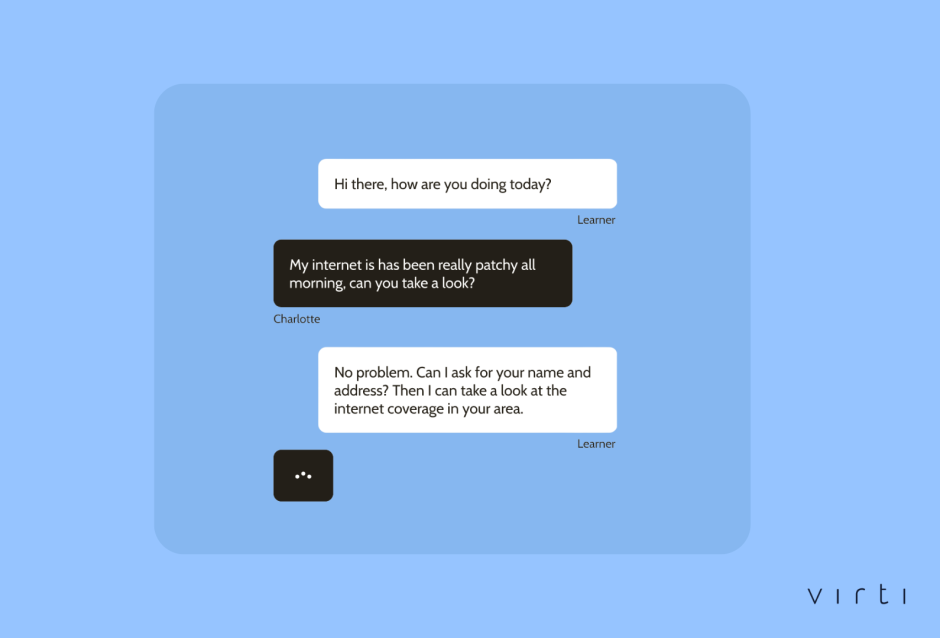
AI role-play helps sales and service teams develop the critical skills they need to excel in a competitive landscape. Unlike traditional training approaches, it allows learners to practice essential customer service skills in role-specific scenarios to help bridge the gap between theory and real-world application. Let’s take a look at three of the ways it can do this:
- Targeted learning modules: Whether your teams need to focus on communication, problem-solving, or empathy, AI role-play can help them develop the skills they need for their role. Tailoring each learning module to the specific needs of individuals accelerates upskilling by only focusing on the skills they need to build.
- Real-time feedback: Instant feedback and analytics on training performance show learners where they are excelling and where they need to improve. Gaining these insights in real-time through customer feedback helps them adjust their approach and makes upskilling quicker. It can also help managers identify additional learning needs to inform future customer service skills training.
- Bring learning to life: AI role-play takes training programs out of the traditional classroom setting. Many people learn quicker and more effectively when they are actually performing tasks rather than just learning the theory behind them. Simulations help learners practice their skills in a controlled but life-like environment, which helps them grow confidence and competence.
The benefits of AI role-play and immersive learning for upskilling sales and service teams to improve customer satisfaction
- Makes upskilling more flexible and accessible: Removes any location-based constraints, making it ideal for both remote and office workers. It also provides flexibility and allows learners to develop their customer service skills at their own pace.
- Scale customer service skills quickly: AI-driven immersive learning can be scaled up and down as required to meet the demands of your sales team training. This type of remote training ensures seamless delivery without logistical challenges.
- Can be personalized to close specific skills gaps: If some teams require upskilling in certain areas, such as handling customer complaints, or others need to focus on developing client service skills, you can tailor it to meet the different training needs.
- Creates an immersive learning experience: It can include real-life scenarios, gamification, and simulation to engage learners and help them achieve better upskilling outcomes.
Tips for designing effective upskilling training programs with important customer service skills
- Understand who your audience is and identify the upskilling needs of your teams.
- Create bespoke sessions that focus on specific skills, such as active listening or improving negotiation techniques.
- Make sure you align your upskilling and training goals with business outcomes.
- Include scenarios and exercises that develop key skills such as communication, conflict resolution, or customer interaction.
- Ensure your training is interactive by incorporating quizzes or gamification to help engage learners and improve outcomes.
- Measure the success of your training program and monitor completion rates and knowledge retention so you can optimize your sales team training.
Example scenario to practice:
Scenario: Handling Heated or Upset Customers
In this AI role play, learners practice staying calm and composed while responding to an angry or frustrated customer. The scenario helps users develop emotional control, empathy, and active listening skills in high-pressure conversations.
Trainees are challenged to de-escalate tension, validate the customer’s feelings, and guide the interaction toward a positive outcome, all while receiving instant AI feedback on tone, empathy, and communication style.

Wrapping it up
Ready to unlock AI-powered upskilling for better customer interactions?
If you are ready to transform your sales team training programs and accelerate the upskilling of your sales and customer service teams, get in touch to discuss your requirements.