
Sales
7 min read
Sales training has a reputation problem. Ask most sales reps what they think of their last training session and you’ll hear the same things; too long, too generic, forgotten by Friday. And yet organisations keep investing in it, wondering why performance isn’t improving. Which ultimately leads them to the question ‘How to improve sales training?’
The answer isn’t more training. It’s better practice. Slide decks, shadowing a sales manager, and one-day sales team workshops might tick a box, but they don’t build the skills sales representatives need when they’re sitting in front of a potential customer. Learning something and being able to do it are two very different things.
As you’re here already, let’s look at what actually makes sales training stick – and why AI-powered roleplay scenarios are fast becoming one of the most effective tools for boosting sales performance. Whether you’re building a training programme from scratch or trying to implement successful sales training, the shift from passive learning to active practice could be the biggest change you make this year.
What is Sales Training?
Sales training refers to the process of equipping a sales team with the skills, product knowledge, and confidence they need to perform. That covers everything from understanding your product and communicating its value, to handling objections, building rapport, and closing deals effectively.
At its core, effective sales training isn’t just about what your team knows, it’s about what they can do (skill development). A rep can know a product inside out and still struggle in a live conversation if they haven’t practised how to talk about it. That’s the gap most training programmes fail to close.
Done well, a good sales training strategy is ongoing, practical, and built around the real situations your team faces every day. It’s less about sitting in a room being talked at, and more about building the kind of muscle memory that makes great salespeople great.

What does goos sales training look like?
The best sales training doesn’t feel like training at all. It feels like practice. It’s built around the real situations a sales team faces: the tricky objections, the unexpected questions, the moments where the conversation could go either way.
Research indicates that 70% of B2B sales reps forget the information they learn within a week of training, highlighting the importance of ongoing reinforcement and measurement of training effectiveness.
That’s why good sales training is also repeatable. A sales training program shouldn’t be a quarterly workshop to sharpen their skills. The opportunity to learn and improve should be there whenever sales reps need it, in a format that fits around their day.
Above all, good sales training builds confidence. Not just knowledge of the sales organization product or process, but the kind of confidence that only comes from having practised a conversation enough times to feel ready for it
Why practice is the missing piece
Think about how elite performance works in any field, anywhere in the world. Athletes don’t just study technique; they train it, repeatedly until it becomes instinct. Sales is no different.
The problem is that traditional training rarely gives sales reps enough chances to practise hitting those sales targets they get hammered about. Role-playing in person with a sales leader can feel high-pressure and awkward. Shadowing a colleague only gets you so far. And there are only so many hours in the day.
What reps actually need is a safe space to practice. Something or somewhere they can handle a tough objection, stumble, try again, and get feedback without it affecting a real deal. The more they can practise realistic conversations, the better sales productivity will be.
How to make sales training stick
A few principles make the difference between sales training that sticks and training that’s forgotten:
- Keep it contextual. Training that mirrors the real situations your team faces will always be more effective than generic content. Build scenarios around your actual customer pain points, common objections, and the conversations your sales reps have every day.
- Make feedback immediate. The longer the gap between a rep doing something and hearing how they did, the less useful that feedback becomes. Build in ways for reps to understand what’s working and what isn’t in the moment.
- Make it repeatable. One session isn’t enough. Sales skills are built through repetition over time, not a single workshop. Give your sales team access to training they can return to whenever they need a refresher or want to sharpen a specific skill.
- Lower the stakes. Reps learn better when they’re not afraid of getting it wrong. Provide sales training in a low-pressure environment where mistakes are part of the process, not something to be embarrassed about, makes a huge difference to engagement and retention.
AI technology and Sales Training
In case you missed it, the best sales training programs use artificial intelligence one way or another.
Sales enablement technology like AI roleplay can centralize training, coaching, and analytics, allowing sales teams to stay aligned and track performance effectively.
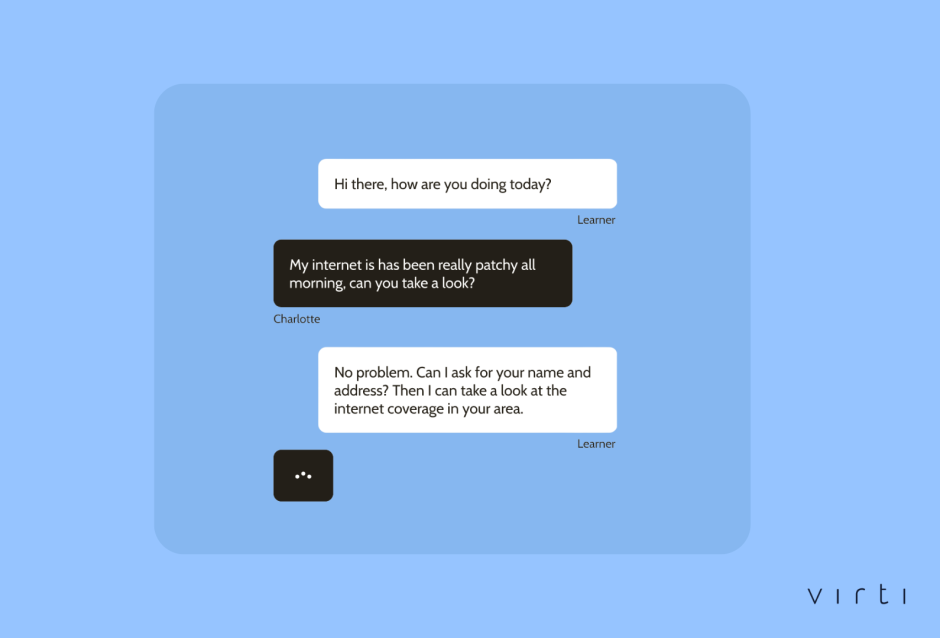
Scenario-based role-playing allows practice in real-world scenarios, building confidence and skill. AI-powered tools like Virti let sales teams practise foundational skills with real conversations and Virtual Humans, lifelike AI characters that respond, react, and push back just like a real customer would. Reps can work through core skills like objection handling, building relationships, lead generation, or closing conversations as many times as they need to, at their own pace, without needing a sales manager to set time aside.
Because the scenarios are built around real sales conversations, the practice feels relevant. Because feedback is built into the experience, reps know exactly where to improve. And because it’s available on demand, training fits around the job rather than interrupting it.
For the most successful sales teams, the outcome is a group that has already experienced real customer conversations and can translate this into real conversations with customers.

What good sales training looks like in practice
When sales enablement technology is engaging, repeatable, and built around real practice, the impact shows up where it matters.
New reps ramp faster because they’re not learning on the job as they’ve already rehearsed the conversations they’ll be having. Experienced reps stay on top of key performance indicators (KPIs) because they have a way to keep practising, not just a memory of a workshop from six months ago. And sales managers’ coaching time reduces as they spend less time running role plays and more time coaching the nuances that really move the needle.
Confidence goes up. Consistency goes up. Customer satisfaction goes up. We’re not making this up; it’s been proven.

Are you ready to transform your sales training?
Sales training should be viewed as a continuous enablement journey rather than a one-time event, aligning with the go-to-market strategy to directly impact revenue.
Virti helps sales teams build the kind of training that actually sticks — scenario-based, AI-powered, and built around the conversations that matter. Whether you want to explore on your own or see it in action with a guided walkthrough, we’d love to show you what’s possible.